
4.32025
What Is a Suspense Account? Examples and How to Use Xero accounting

While both are temporary holding accounts, suspense accounts and clearing accounts serve different purposes and are often confused. A suspense balance refers to the total amount of money temporarily held in a suspense account. This account is used to park funds or transactions that cannot immediately be classified into the correct accounting category due to incomplete information or uncertainty. Payments received for invoices with disputed charges are held in a suspense account until the dispute is resolved. At MNO Inc., a customer payment of $2,500 was received for an invoice that had disputed charges. The accounting team placed the payment in a suspense account while the dispute was resolved, ensuring that the funds remained unallocated until it was clear how they should be appropriately applied.
Example 9: System Errors
- Well-documented transactions reduce the likelihood of errors, facilitate reconciliation processes, and expedite the resolution of any discrepancies.
- By using a suspense account, businesses can keep their accounting systems running smoothly while resolving any discrepancies or uncertainties in their financial records.
- The goal is not to monitor more aggressively, but to monitor more intelligently.
- A suspense account is helpful in a trial balance when the debit and credit totals do not match.
- AI transaction monitoring must therefore balance intelligence with transparency.
Later, you contact the customer, clarify the payment details, and confirm the correct account. Once everything is resolved, you transfer the payment amount from the suspense account to the correct customer’s account in your financial records. Once the cause of the discrepancy is identified or the correct classification is determined, the suspense account must be cleared.
Monthly Financial Reporting Template for CFOs
You also avoid failing to record a transaction because of missing information. Let us understand how suspense account entries Purchases Journal work and how it helps accounting teams with the help of a couple of examples. Suspense accounts are often used when there are one-sided entries or when errors in ledger postings are found during reconciliation or audit. Chartered accountant Michael Brown is the founder and CEO of Double Entry Bookkeeping.
When Are Suspense Accounts Used?
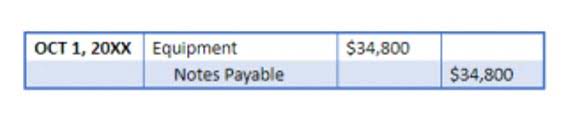
Suspense accounts help ensure debits and credits remain balanced in the trial balance, and their creation is often triggered by errors or discrepancies that require further analysis before resolution. However, this entry is explicitly marked as temporary and requiring further action. Suspense Accounts are essential tools in accounting, providing a temporary holding place for unidentified, incomplete, or erroneous transactions.
- As soon as possible, the amount(s) in the suspense account should be moved to the proper account(s).
- A business might receive $3,000 from a client, but the amount doesn’t correspond to any outstanding invoice.
- Any balance is investigated so that correcting adjustments can be made before the final financial statements are issued.
- If you don’t know who made the payment, look at your outstanding customer invoices and find which one matches the payment amount.
- After you make corrections, close the suspense account so that it’s no longer part of the trial balance.
- Let’s suppose you have been alerted that a remittance someone sent you from abroad is ready for withdrawal.
Clearing accounts handle knowns that are simply in transit as part of routine workflows. Suspense entries require someone to track down information and make decisions. A suspense account is used when there’s uncertainty or missing information about a transaction. The accountant doesn’t know where it ultimately belongs until more details emerge. A clearing account is used for transactions where the final destination is already known, but the transfer is still in process—like payroll processing or credit card payments moving through the system.
Real-Time or Near Real-Time Processing
Regular training sessions and updates on accounting standards and practices contribute to the overall preventive measures against suspense account occurrences. Below are suspense account examples that will give you an idea of when you can open a suspense account. To illustrate the concept of suspense account, below are some examples of how this account works in practice.

This separation from the ‘main’ accounts is important for ensuring that the financial statements reflect a true and reliable representation of a company’s financial position. In short, a suspense account deals with errors, a provision deals with expected liabilities, and a reserve deals with profit allocation. When a business is unsure about the account in which a particular transaction has to be parked, it uses a suspense account. However, a brief consultation with the respective accountant is necessary before taking such steps. It is important to note that Suspense Accounts should be used sparingly, as they can become a source of confusion and can complicate accounting records.
Financial Close Solution
In order to analyse each product line, product- line managers need to know two factors. A distinct unit within a brand or product line distinguishable by size, price, appearance or some other attributes. For instance, LCD, CD- ROM drive and joystick are various items under palm top product type. A group of items within a product line that share one of several possible forms of the product. A group of products within the product family recognised as having a certain functional coherence.
- This approach helps institutions manage RTP fraud without overwhelming teams or customers.
- The ultimate goal is to clear the account by rectifying all errors, making its final balance zero.
- Once the correct account for a transaction is identified, the entry is transferred from the suspense account to the appropriate ledger.
- Download our data sheet to learn how to automate your reconciliations for increased accuracy, speed and control.
- A suspense account helps to isolate the impact of system errors until the necessary system corrections or manual adjustments can be made.
- Errors that affect one account will affect the agreement of the Trail balance.
What Transaction Monitoring Must Deliver to Stop Mule Networks

However, after getting more information about the nature of the transaction, he will move it from the suspense account to its respective account. Once all information is available and the discrepancies have been resolved, the funds held in a suspense account are moved to the appropriate account. If the transaction cannot be completed, the funds may be reversed back to the original https://profitlite.in/married-filing-jointly-vs-separately-which-to-2/ source or company. Banks use Suspense Accounts to manage various financial transactions effectively and ensure the provision of timely and accurate financial reports.

Fast domestic payment rails
The general suspense account is used to hold transactions with incomplete information. The cash suspense account holds funds that cannot be matched to any other accounts, and suspense account examples the revenue suspense account holds revenue that cannot be identified to a specific department or product. Mortgage servicers use suspense accounts when borrowers make partial payments. If a borrower with a $2,000 monthly payment sends only $1,500, the servicer places it in suspense until the remaining $500 arrives.

